

Amazon Leo vs. Starlink: A New Space Internet Rival Emerges
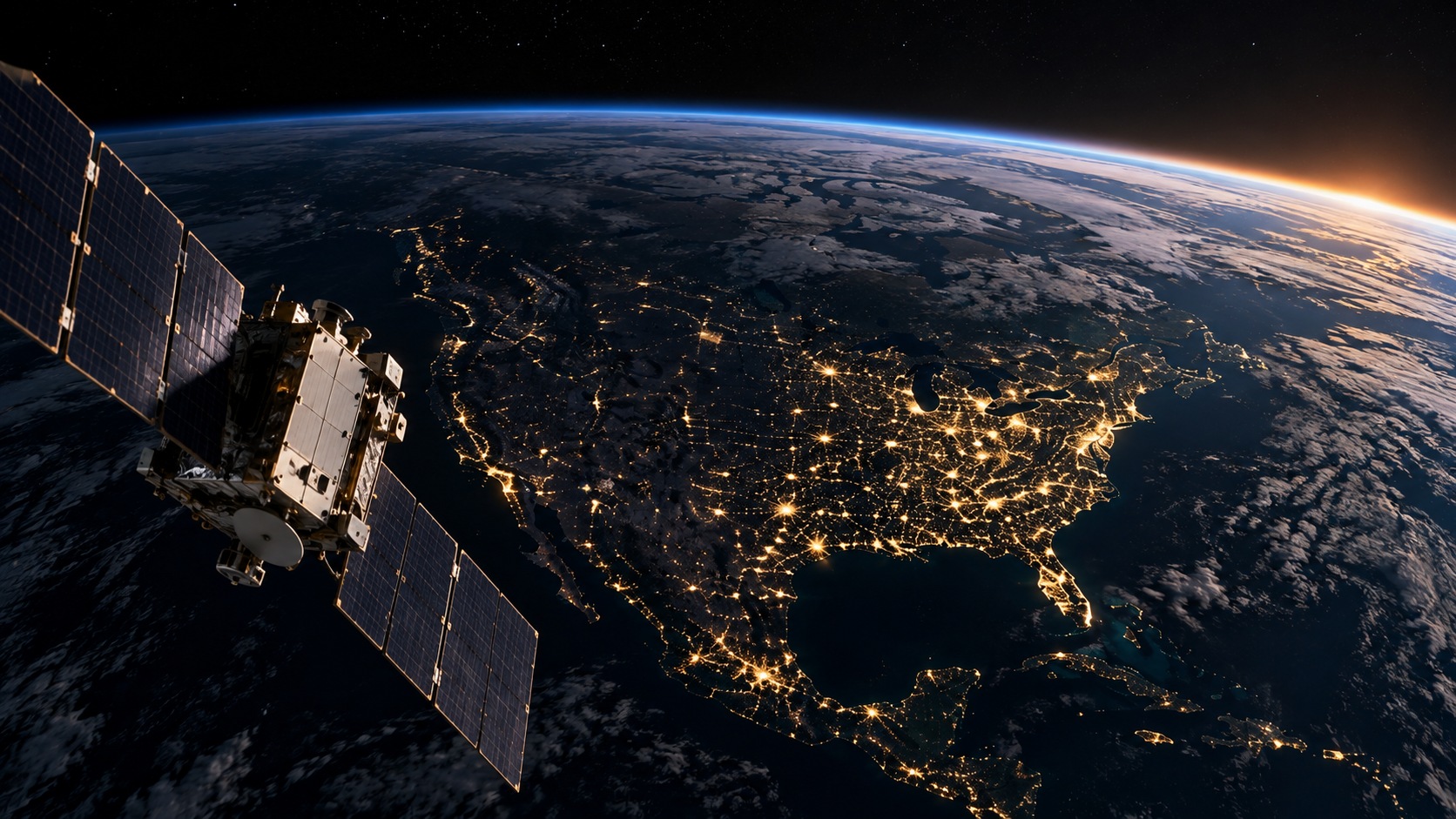
SpaceX's Starlink has spent years transforming satellite internet from a niche technology into a rapidly growing global industry. Now, one of the world's largest technology companies is preparing to challenge its dominance.
Amazon Leo, formerly known as Project Kuiper, is Amazon's ambitious entry into the satellite internet market. Backed by the company's vast cloud infrastructure, manufacturing capabilities, and financial resources, the project aims to bring high-speed connectivity to homes, businesses, aircraft, and some of the world's most remote locations.
But Amazon isn't simply building another alternative to traditional internet providers.
Its vision goes much further, combining thousands of satellites, laser-based communications, and direct integration with Amazon Web Services (AWS). The company is also pursuing technology that could eventually allow smartphones to connect directly to satellites, providing connectivity beyond the reach of traditional cellular towers.
With Starlink already established and Amazon preparing to expand commercial service, a new chapter in satellite communications is taking shape. The competition could influence how people, businesses, and entire industries connect in the years ahead.
Amazon's Race to Challenge Starlink
In October 2026, Amazon announced that its satellite manufacturing facility in Kirkland, Washington, had produced more than 1,000 spacecraft.
That's a significant achievement for a project that began development in 2018.
As of late October, Amazon had launched nearly 400 satellites across 14 missions, building toward a first-generation constellation of more than 3,200 spacecraft.
Manufacturing satellites is only one part of the challenge. Amazon must also secure rocket launches, position satellites into the proper orbits, and build the ground infrastructure needed to support reliable service.
Amazon has secured launch agreements with United Launch Alliance, Arianespace, Blue Origin, and even SpaceX.
Yes, the company behind Starlink is helping Amazon deploy a competing satellite internet network.
Amazon is targeting an initial commercial rollout by the end of 2026, while Starlink already has thousands of satellites operating and an established customer base.
The challenge for Amazon is converting its significant investment into reliable service that customers are willing to adopt.
Building an Internet Network in Space
Traditional satellite internet often relies on satellites positioned approximately 22,000 miles above Earth.
Amazon Leo operates much closer to the planet, roughly 370 to 390 miles above the surface.
That shorter distance allows signals to travel with considerably less delay, making low Earth orbit satellite networks better suited for video calls, cloud applications, and other activities requiring responsive connections.
Customers connect through electronically steered antennas that communicate with satellites moving overhead.
But one of Leo's more interesting technologies is what happens between the satellites themselves.
Amazon is developing a network that uses lasers to transmit information between spacecraft.
These optical connections allow satellites to relay data through space instead of depending entirely on nearby ground stations.
Amazon previously demonstrated laser communication between prototype satellites at speeds of 100 gigabits per second. That figure describes communication between spacecraft, not the internet speed an individual customer would receive.
For ships traveling across oceans, aircraft in remote airspace, and facilities far from traditional infrastructure, this technology could create new connectivity options.
AWS Could Be Amazon's Biggest Competitive Advantage
Starlink has a substantial head start, but Amazon brings something few telecommunications companies can match: Amazon Web Services.
AWS already supports cloud applications, computing infrastructure, and data processing for businesses and government organizations around the world.
Amazon Leo could extend those capabilities into locations where conventional internet connectivity is unreliable or unavailable.
One planned offering, called Direct to AWS, would allow organizations to connect satellite terminals privately to applications and infrastructure hosted in AWS.
Consider a utility company monitoring electrical equipment in a remote location. Sensors could send operational data through Amazon Leo to cloud applications that analyze performance, identify problems, and alert technicians.
Similar applications could support agricultural operations, construction sites, emergency response teams, and industrial facilities.
Amazon is also developing enterprise satellite terminals with advertised download speeds reaching 1 Gbps and upload speeds of up to 400 Mbps.
Those figures represent equipment capabilities rather than guaranteed real-world performance.
Private cloud connectivity does not eliminate cybersecurity risks, but it gives organizations another way to connect remote operations with their existing infrastructure.
For Amazon, satellite connectivity represents more than another internet subscription. It could become a powerful extension of its cloud computing business.
Amazon's Globalstar Acquisition Takes a Major Step Forward
Amazon's ambitions now extend beyond broadband terminals and traditional satellite internet.
On October 27, 2026, the Federal Communications Commission approved Amazon Leo's approximately $11.5 billion acquisition of Globalstar, a satellite communications company whose technology already supports emergency satellite features on compatible Apple devices.
The regulatory approval clears a major hurdle for the acquisition, although the transaction has not yet closed.
The deal would give Amazon access to Globalstar's satellite infrastructure and approximately 25 megahertz of valuable mobile-satellite spectrum.
That spectrum is especially important because Amazon wants to expand into direct-to-device connectivity, allowing compatible smartphones and other devices to communicate directly with satellites when conventional cellular networks are unavailable.
Amazon has also proposed a separate next-generation constellation of up to 5,105 satellites designed for direct-to-device services, with deployment planned to begin in 2028.
The company's longer-term ambitions include satellite-enabled messaging, voice communication, data services, and emergency connectivity.
Amazon and Apple have announced an agreement to continue satellite services for supported iPhone and Apple Watch devices following the acquisition.
The FCC's approval brings Amazon closer to those ambitions, but regulatory clearance alone does not mean the proposed next-generation network is operational.
Still, the acquisition represents a significant expansion of Amazon's plans and could eventually make satellite communication a more familiar part of everyday mobile connectivity.
Beyond Homes: Aircraft, Businesses, and Military Operations
Amazon is already pursuing commercial partnerships in industries where dependable connectivity is particularly valuable.
In March 2026, Delta Air Lines announced plans to install Amazon Leo connectivity on an initial 500 aircraft beginning in 2028.
The company is also working with organizations interested in using satellite networks for transportation, enterprise communications, and other specialized applications.
On October 13, Amazon reported results from a demonstration conducted with the U.S. Army's C5ISR Center at Aberdeen Proving Ground in Maryland.
Using a Leo Pro antenna, the test achieved peak download speeds exceeding 400 Mbps while communicating with satellites passing overhead.
For military personnel operating in remote environments, satellite connectivity can support communication between field units and command centers without relying exclusively on terrestrial networks.
The demonstration showed promising technical capabilities, but a successful test is different from delivering consistent performance across a large commercial network.
Amazon will still need to demonstrate reliability under sustained demand, varying weather conditions, and growing numbers of users.
Can Amazon Really Compete With Starlink?
Amazon has the financial resources, manufacturing capacity, cloud infrastructure, and commercial relationships to become a serious competitor in the satellite internet industry.
What it doesn't yet have is Starlink's established network coverage or years of widespread commercial operation.
The company has also faced regulatory and deployment challenges. In June 2026, the FCC granted Amazon a conditional waiver related to an interim satellite deployment milestone.
Expanding the network will require continued launches, reliable satellites, ground infrastructure, regulatory approvals, and competitive pricing.
Meanwhile, SpaceX is continuing to develop and expand Starlink.
But competition between two companies with enormous engineering resources could accelerate the development of satellite communications.
Businesses may eventually gain more connectivity choices. Rural communities could see additional broadband options. Aircraft, ships, and industrial facilities could access increasingly capable communications networks.
And as direct-to-device technology develops, smartphones may become less dependent on cellular towers in areas where coverage is limited or nonexistent.
Amazon Leo has moved well beyond concept drawings and early prototypes. Its satellites are operating in space, its manufacturing facilities are producing spacecraft, and major organizations are already testing or planning to use the network.
The Globalstar acquisition could add another dimension to those efforts, bringing Amazon closer to connecting smartphones and other devices directly to satellites.
Starlink proved that satellite broadband could become a mainstream business. Amazon is betting it can build a competing network that connects not just people, but businesses, cloud infrastructure, and eventually the devices in their pockets.
York Tech Services | Technology News & Analysis
Sources
- Amazon Leo satellite manufacturing
- Amazon Leo launch progress
- Amazon Leo enterprise connectivity and AWS
- Delta Air Lines and Amazon Leo agreement
- Amazon Leo U.S. Army demonstration
- FCC approval of Globalstar acquisition
- Globalstar acquisition details